Welcome to the Elstree & Borehamwood Museum blog.
This blog is about all those happenings inside and outside the Museum that have caught our attention.
From events and exhibitions, to new discoveries in the collections, to news and views.
Any comments and items to go here please contact Simon on info@elstree-museum.org.uk
New Year, New Exhibition - Work-In-Progress Part One

The empty Museum on Monday before the build starts
Let's start the New Year with a New Exhibition - Off The Rails : The Line That Never Was. The full story of the Elstree Extension to the Tube that was stopped by the Second World War, nearly resumed afterwards but cancelled by the end of the 1940s. And we have an 18-foot model of the line as it would have been. The Exhibition opens on Thursday 20th January and here's the start of the work as the model arrives :

Tony starts work assembling his model on Tuesday.

Just a few days now to Christmas week when our current Holby City Exhibition will be coming to an end. This is your last chance to find out the answers to all those questions about the show you always wanted to ask.
And don't forget that Holby City itself will coming to an end in the new year. So this is another last chance to see behind the scenes and remember all the great characters and situations you've grown to love over the last 20 years.
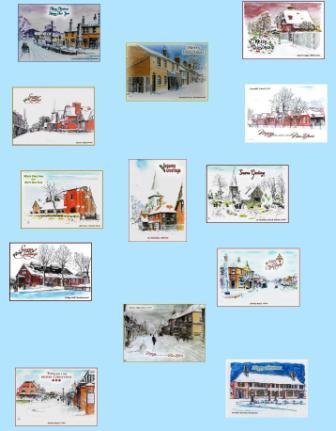
In addition it's the last chance to get your local Christmas cards. Local scenes, some painted, some photographs - all very Christmassy. So pop into the Museum to get your traditional, non-digital, Christmas cards, support your Museum and only 50 pence each.

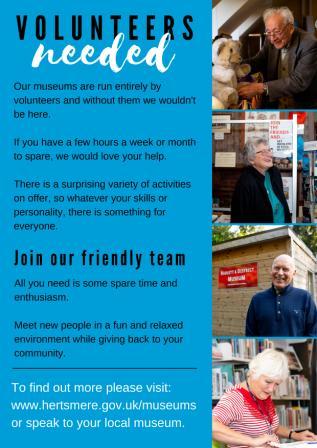
We're looking for volunteers to help us run the Museum.
Any one can do it!
Please pop in for a chat or drop us a line to INFO
See our new video HERE

Our first ever blog post in May 2015 was a big thank you to David Lally for his extremely generous donation to the Museum. And now he has surpassed himself and donated £750 to us this week. Once again we thank you David, and hope to see you in the Museum again! Our photo shows Museum Manager, Dave Armitage, accepting the cheque.

The Gate Studios c.1928
Opened in 1928, the studios were in use until the early 1950s, after which the building was occupied by Harkness Screens Ltd for the production of cinema screens, until 2003 when the studios were earmarked to be demolished to make way for 133 new homes.
Protests against the demolition of the studios building came from an unexpected quarter. The ghost of a man wearing 1920s clothing was seen by workers at the studios and looked like he was guarding something.
The figure was described as a smart, tall, bearded man in his forties to fifties, dressed in a white shirt and black trousers. A cold blast of air accompanied his appearance.
He was seen on several occasions, once in a corridor wearing a long jacket where he was described by the witness as ‘just fading away’.
One morning in 2003, a maintenance engineer at the studios saw a shadowy figure out of the corner of his eye. He was working on the floor, looking up at the cinema screen and saw the figure walk up the gangway and go behind some piles of foam. When no one emerged, he went to investigate but no one was there.
Perhaps you can tell us more about the ghosts of the former studios and whether they wander the site of the new housing development?

1953 Coronation display by Gate Studios on waste ground in Shenley Road

Halloween Ghost Stories : Who is the Ghost at Stirling Corner?
Vic Rowntree shared this tale. He remembers his father returning home from a late shift as a bar steward, very shaken up. His father worked at the Kings Arms at Stirling Corner. On this particular night he walked home along his regular route by the service road next to the A1 Barnet by-pass. When he arrived home, pale and shocked, all he would say is that he had seen a ghost. That same month, a local newspaper published an article asking if there was a ghost at Stirling Corner.
A resident of one of the nearby cottages reported hearing a strange noise outside his home and on investigation, found a woman standing smiling beside a derelict shed. He looked around to see if anyone else was nearby and when he turned back, she had vanished.
Perhaps someone out there can tell us more!
Whilst the Museum is closed and our collections unable to be seen by visitors, we have created a weekly virtual museum with an Object of the Week feature from our collections.
Object of the Week : Y is for Yale Key

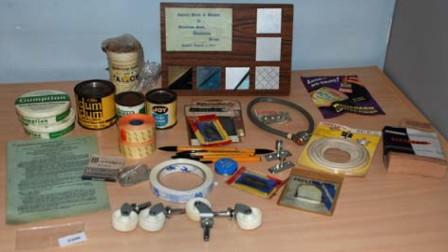
The giant Yale Key hanging up behind the reception desk in the Museum, was donated from Borehamwood Ironmongers.

This key was located in the doorway of Borehamwood Ironmongers for many years. The shop was known as ‘the Emporium that sold everything’ and was probably the only place in Borehamwood where you could get many different types of key cut.


Fred Thomas was the man to go to for key cutting and any other questions relating to ironmongery or even screws for those DIY projects. Nails were brought by weight and the Museum holds the weighing scales that were used for this very purpose.
The shop stocked one of almost everything and was used by public and contractors alike. There was usually a queue back to the front door at busy times.

The mechanical till was unique and never wore out. In the times of power cuts during industrial disputes of the 1970s, it was still going when all electrical tills had stopped working. VAT was always added on to any purchase making things seem a little more expensive than expected. The shop was located between the Crown Inn and Glenhaven Avenue and lasted for 42 years finally closing in 2002.

Whilst the Museum is closed and our collections unable to be seen by visitors, we have created a weekly virtual museum with an Object of the Week feature from our collections.
Object of the Week : X is for Exhibitions
With the Museum set to re-open in September, we thought it would be a good time to look back at all the exhibitions we have presented since opening in November 2013. A trip down memory lane.
November 2013 the Museum opened with Through the Lens a visual ‘now and then’ journey through stills of Borehamwood locations which had been used in film and TV.
June 2014 heralded 100 years of Film and TV in the area since Neptune Studios arrived in the village in 1914.

September 2014 told us we Could do Better! A celebration of 75 years of Hillside School.

January 2015 commemorated 100 years since the end of WWI.
Then in the summer of 2015 In Our Manor opened, celebrating 30 years since EastEnders began filming just down the road. With the added feature of being able to see the ‘Bridge Street’ railway bridge on the set from the upper floor windows!

January 2016 opened with Smile Please – a history of photography, in particular Wellington and Ward in Borehamwood.
July 2016 the volunteers built a replica of Mary Hanson’s sweet shop as part of the Going Down the Shops exhibition, which looked at the changing face of Shenley Road.

January 2017 saw the opening of From Village to Town, Celebrating a Century of Migration, an ambitious project eighteen months in the making, focusing on the radical transformation of Elstree and Borehamwood over a century, and the people whose arrival here made this happen. Fifty residents were interviewed and their stories formed part of the exhibition, and are available on this website under 'Oral History'.
The exhibition which ran over Christmas 2017 was Toys Games and Gadgets, a fun look at childhood pastimes from the 60s, 70s and 80s.

Another ambitious exhibition was All Change! which opened in January 2018 and by public demand, extended its run to September. The Museum was transformed into a railway station complete with steam engine!
This was followed by Save Our Studios, a display with much input from Paul Welsh who led the campaign to save Elstree Film Studios between 1988 and 1996.

We were launched into the Swinging Sixties in May 2019 with Good Vibrations which recreated the local youth club and music venue The Lynx. Original artwork and designs from The Lynx evoked the atmosphere of the time, complete with video footage of the famous bands that played there.

Which brings us up to date. October 2019, actor Bob Barrett opened the Holby City at 20 exhibition, which celebrated 20 years of the drama being made down the road at BBC Elstree. More poignant now due to the recent announcement that the show will be cancelled and off our screens by Spring 2022. Covid cut through the exhibition just 3 months into its run, but with the Museum re-opening again in September, it will continue until the end of the year, so that everyone gets a chance to visit.

Elstree and Boreham Wood and the 1948 Olympic Games
The athletic events in the 1948 Olympic Games took place in Wembley Stadium. The Marathon and the 50K walk started and finished there but their route took them along the roads of Hertfordshire and Middlesex. In Hertfordshire, the route passed through Elstree and Borehamwood.
The Marathon runners entered Hertfordshire at Stirling Corner and then onto the Barnet Bypass, through to the Elstree Way, Shenley Road and along Theobald Street to the railway bridge at Radlett.
Here the runners turned north onto Watling Street and passed through villages to the west joining the Watford Bypass and returning to the Stadium, leaving the Hertfordshire boundary shortly before passing the foot of Elstree Hill South.
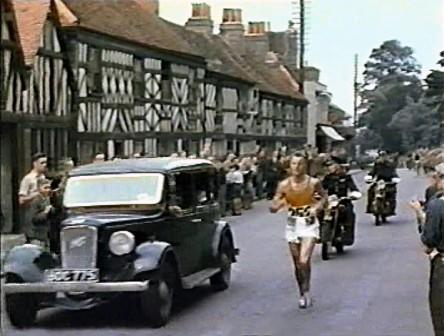
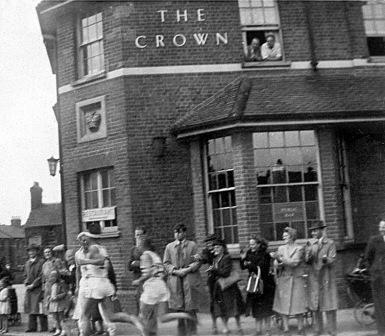
Marathon runners in Elstree... ...and in Boreham Wood...
A week later, the Walking competitors had a shorter route back to Wembley, turning south along Watling Street and passing through Elstree Village at its crossroads, which was the highest point of the race. Here they re-entered Middlesex.
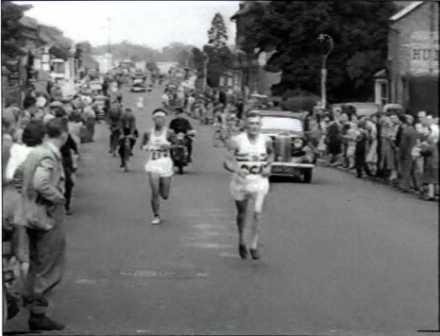
...down Shenley Road
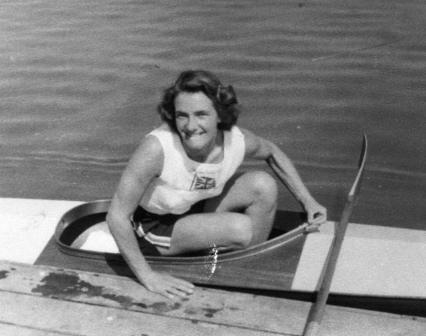
Another local Olympic fact: In the 1948 Olympics, Watford born Joyce Richards was the first woman British Sprint Canoeist to represent Great Britain in the Olympic Games. She did all her training on the reservoir at Elstree :
Whilst the Museum is closed and our collections unable to be seen by visitors, we have created a weekly virtual museum with an Object of the Week feature from our collections.
Object of the Week: W is for Wellington and Ward


JBB Wellington... ,,,and his factory
John Booker Blakemore Wellington, photographer, collaborated with George Eastman of the Kodak Company and became the first manager of the Kodak works in Harrow between 1891 and 1893. The Eastman Company, later renamed the Eastman Kodak Company (commonly known as Kodak), introduced the first commercially available transparent celluloid roll film. George Eastman created a flexible roll film that did not require the constant changing of solid plates. This allowed him to develop a self-contained box camera that held 100 exposures of film. This was the first camera inexpensive enough for the average person to afford.
Wellington moved to Elliott and Sons, Barnet in 1894 and with his brother-in-law H.H. Ward, founded the company of Wellington and Ward in Borehamwood, manufacturers of photographic plates, films and papers of which he was scientific and technical Director. The business flourished until 1933.


At this time, he was living at The Elms, Shenley Road, which stood next-door to Glenhaven House and which was only demolished in February 1987.
Before his death in 1939, Wellington had moved to The Leys, Barnet Lane, Elstree.
The Museum has some of the glass lantern plates and photographic paper from the company in the collection as well as photographs of the staff and some evocative photographs taken by Wellington himself:


Show only:
» Events
» Collections
» News
» Exhibitions
Elstree & Borehamwood Museum
96 Shenley Road
Borehamwood
Herts
WD6 1EB
Tel: 01442 454888


Admission: Free
Opening times:
Opening times:
Tuesday, Wednesday, Thursday
12pm - 6pm
Saturday 10am - 3pm
Registered Charity No.1157770


