Just in case you may be feeling a bit bored with all this hugging-the-furniture malarkey, we’re beginning a series of Local History stories to help you pass the time. And if you have any short illuminating items to send us, please use our email and pass them on.
A Short History of Woodcock Hill
The earliest records show that the land was owned by St Albans Abbey, given by Offa, King of Mercia in the 8th Century. After the Reformation, the land was passed to Anthony Denney by Henry VIII in 1539.
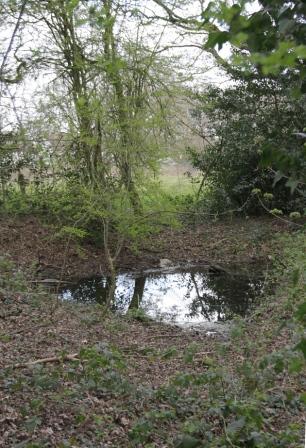
In 1765, Furzehill Road was built to link Barnet Lane with Shenley Road. At that time, Barnet Lane was a drover’s road. Cattle, sheep, pigs, goats and geese passed along the route. Various ponds on the way provided a good supply of water and became known as Drover’s Ponds. The animals were taken to the market at Barnet, or on to the London markets. Some had already travelled from as far afield as Scotland and Wales using the old drovers roads, and many of these are long-distance footpaths still in use today.
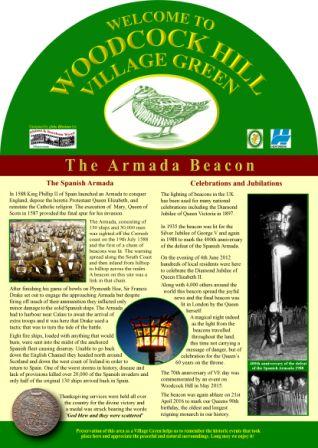
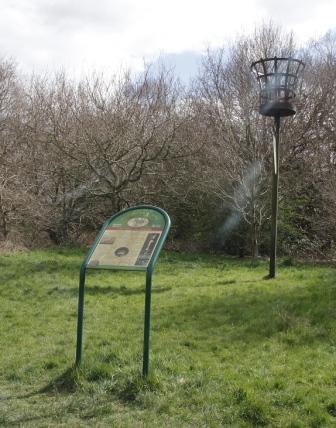
1588 saw the naval victory over the Spanish Armada. To alert London of the Armada’s approach, beacons were lit from South West England across the country. Woodcock Hill was one of the links in the beacon chain being the first high ground visible from Hampstead Heath. After the defeat of the Armada the beacons were lit again to celebrate and to pass on the good news.
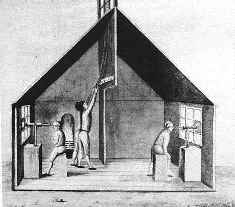
In the time of the Napoleonic Wars, a telegraph station was erected near the beacon site on top of Woodcock Hill. This enabled the Admiralty to get messages quickly to Yarmouth in the east of the country from central London. The telegraph on the Hill sent messages from Hampstead Heath in the south, and on to St Albans in the north, via the semaphore on top of their Clock Tower, then onwards to Ivinghoe Beacon. Another link went down to the south coast and Portsmouth.
1861 saw the coming of the railways to Borehamwood. This new mode of transport brought the farm stock more quickly to the capital and its outskirts. More housing was built in Borehamwood and Elstree. In 1862, the first railway tunnel was built at Woodcock Hill with a second tunnel added in 1868. Clay from the tunnels went to make bricks for the ever expanding housing developments. Some of the bricks used are still to be seen in houses in Brownlow and Drayton Roads.
In 1890, an aqueduct was built to carry the brook across the railway through Borehamwood to Radlett and the River Colne.
Local Scouts guarded the beacon at Woodcock Hill in 1935, when it was lit to celebrate the coronation of George V - 1,390 beacons were lit across the country. Land here was part of WW11’s 'Dig for Victory’ campaign. The land was particularly suited to wheat but several allotments were allowed, particularly alongside the railway. In 1944, a doodlebug dropped opposite Milton Drive, and part of the bomb crater is still visible.
During the Centenary Commemorations of the Spanish Armada in 1988, a procession went from the Town up the hill recreating the Armada Beacon ceremony. Local school children dressed in period costume and Town and Borough dignitaries were there to officiate. Again the local 1st Elstree Scouts and Elstree District Venture Scout troop were on hand to help. There have been several beacon lightings in recent years to celebrate national events.
The whole area was given Wildlife Conservation status in 2002. Following a great community campaign, in 2008 the land was ratified by Hertfordshire County Council as Village Green and a Trust was formed. The Hill continues to be a historical site as well as a valuable community asset.
Show only:
» Events
» Collections
» News
» Exhibitions
Elstree & Borehamwood Museum
96 Shenley Road
Borehamwood
Herts
WD6 1EB
Tel: 01442 454888


Admission: Free
Opening times:
Opening times:
Tuesday, Wednesday, Thursday
12pm - 6pm
Saturday 10am - 3pm
Registered Charity No.1157770


